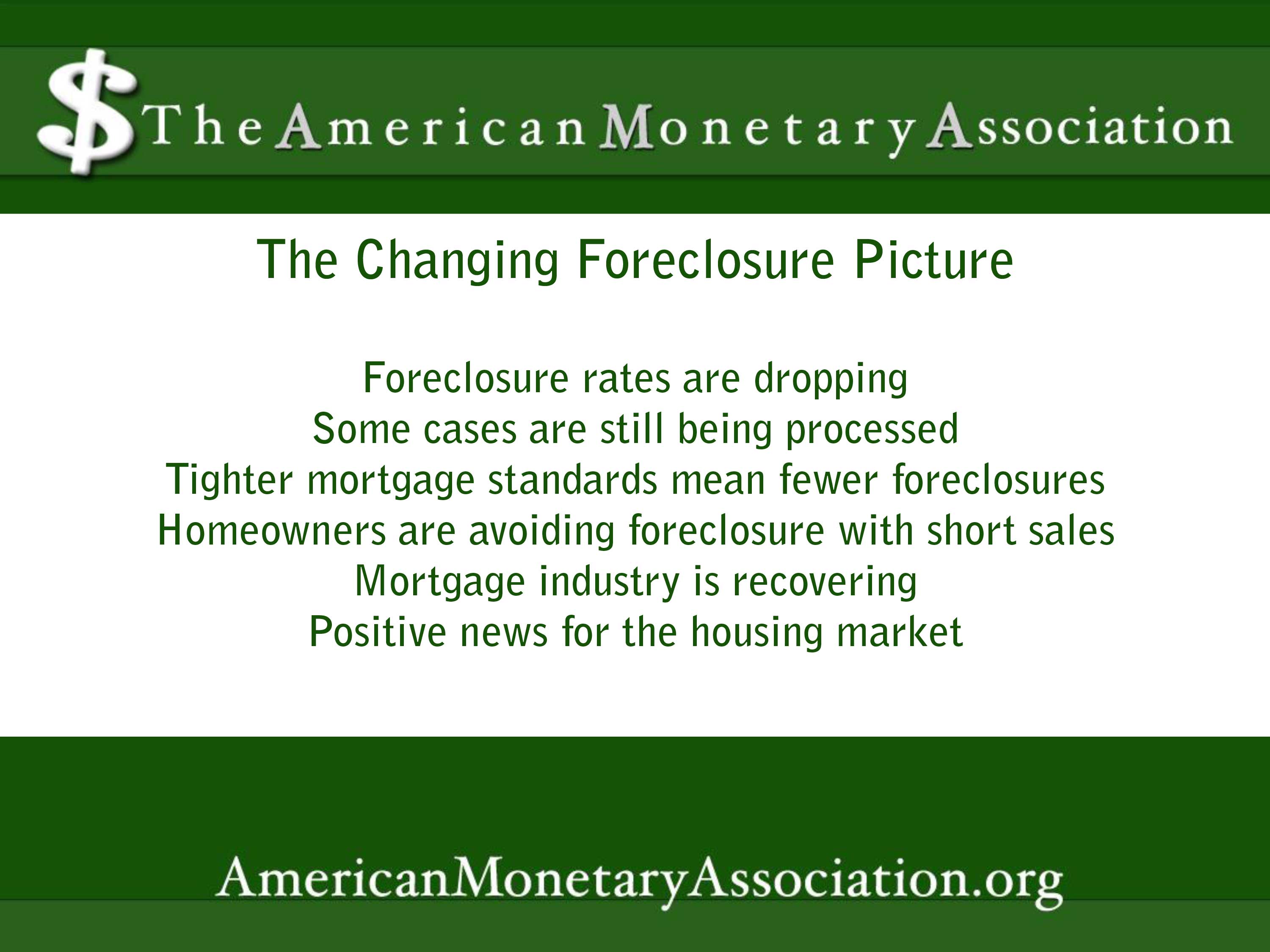
 Around the time of the 2008 Presidential election, the nation’s housing market was heading toward collapse, as masses of “subprime” mortgage holders fell into default, flooding the market with large numbers of foreclosed homes and creating a ready source of low-cost income property. Now, four years later, that flood of foreclosed homes has, at least temporarily,
slowed to a relative trickle, with implications not only for investors but also for the health of the US housing industry as a whole.
As mortgage payments ballooned after an introductory low rate, marginal mortgage holders found themselves drowning in debt. Foreclosure proceedings were initiated on thousands of homes across the country. Many of those foreclosure cases were resolved, moving through the lenders to the courts, and the homes involved went up for sale to all buyers. But the sheer numbers of foreclosure actions meant that some were held up for years by backlogged lenders and courts. Homeowners, aware of the glacial pace of foreclosure actions, remained defiantly in their homes, knowing that it could take years to complete their cases.
Now, some of those foreclosures are making in to the markets, available for sale or at auction to all bidders. Others, though, are not. Packages of foreclosures were picked up by the federal mortgage giants Fannie Mae and
m/” target=”_blank”>Freddie Mac, and those agencies, along with some other lenders and real estate groups, are now offering them for sale to investment companies – sales that are off limits to individual buyers. Those foreclosures, intended as long-term rentals, may not return to the open market for years.
Another reason for the relative scarcity of foreclosures has to do with current management of troubled mortgage holders – those who are making their mortgage payments, but only
barely. Many of these homeowners are only a payment or two away from defaulting. Because of this, a number of lenders starting with Fannie Mae have expanded the list of “hardship” criteria making a homeowner eligible for a short sale of the home, thus avoiding a full foreclosure action.
The development of new hardship criteria is only one of the actions taken by a mortgage industry struggling to regain its footing. More stringent screening of mortgage applicants is reducing the number of applications – and consequently the number of “subprime” borrowers likely to run into trouble later on.
The US housing market as a whole has undergone significant changes in the last four years, with implications, both good and bad, for independent investors. Foreclosures may not be in as ready a supply these days – but a rebounding market and a healthier mortgage industry may create new opportunities for income property investors ready to put Jason Hartman’s investment strategies to work.
The American Monetary Association Team